

GoVerse is a distributed object runtime for Go, inspired by Orleans.
It provides virtual actors, automatic placement, lifecycle management, and streaming RPCs.
Designed for building fault-tolerant backend services and large-scale real-time systems.
v0.1.0 — first tagged release. Core concepts (objects, nodes, gates) are settled and basic failure modes are handled. APIs may still change before v1.0. Production use is at your own risk; see CHANGELOG.md for known issues.
-
Virtual objects with automatic lifecycle & activation
-
Exactly-once call semantics for reliable inter-object communication
-
Sharded placement using etcd with dynamic object & shard rebalancing across nodes
-
Gate architecture with streaming gRPC and HTTP REST API
-
Automatic failover & fault recovery
-
PostgreSQL persistence with JSONB storage
-
Built-in Prometheus metrics and pprof profiling
-
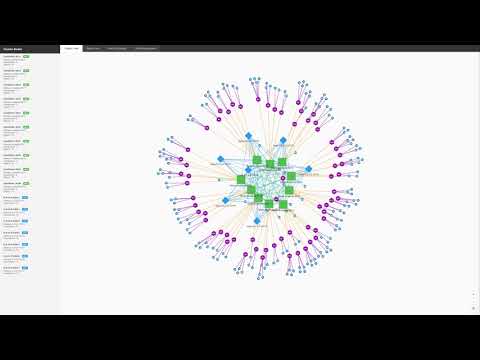
Inspector UI for visualizing object topology (demo video)
Click above to watch the cluster bootstrap demonstration visualized by GoVerse Inspector
- Exactly-once semantics: Reliable calls ensure each operation executes once, even with failures or retries
- High-level programming model without giving up Go's performance
- Scales horizontally with minimal coordination
- Built for trading infra, backend automation, and real-time apps
GoVerse uses a Node + Gate architecture:
- Node hosts distributed objects and handles object lifecycle
- Gate accepts client connections (gRPC and HTTP) and routes calls to nodes
// counter.go
type Counter struct {
    goverseapi.BaseObject
    value atomic.Int32
}

// Object methods use protobuf types for HTTP/gRPC compatibility
func (c *Counter) Add(ctx context.Context, req *wrapperspb.Int32Value) (*wrapperspb.Int32Value, error) {
    newValue := c.value.Add(req.GetValue())
    return &wrapperspb.Int32Value{Value: newValue}, nil
}// node/main.go
func main() {
config := &goverseapi.ServerConfig{
ListenAddress: "localhost:47000",
AdvertiseAddress: "localhost:47000",
}
server, err := goverseapi.NewServerWithConfig(config)
if err != nil {
log.Fatalf("Failed to create server: %v", err)
}
goverseapi.RegisterObjectType((*Counter)(nil))
// Create Counter object when cluster is ready
go func() {
<-goverseapi.ClusterReady()
_, err := goverseapi.CreateObject(context.Background(), "Counter", "my-counter")
if err != nil {
log.Printf("Failed to create counter: %v", err)
}
}()
server.Run(context.Background())
}# Start the gate with HTTP API enabled
go run ./cmd/gate/ -http-listen=:8080Once the node creates the my-counter object, you can call its methods via the gate's HTTP API:
# Call object method (increment by 5)
# The request body is a base64-encoded protobuf Any containing Int32Value{Value: 5}
curl -X POST http://localhost:8080/api/v1/objects/call/Counter/my-counter/Add \
  -H "Content-Type: application/json" \
  -d '{"request":"Ci50eXBlLmdvb2dsZWFwaXMuY29tL2dvb2dsZS5wcm90b2J1Zi5JbnQzMlZhbHVlEgIIBQ=="}'
See HTTP_GATE.md for details on encoding protobuf messages and the httpgate example for a helper to generate these values.
go get github.com/xiaonanln/goverseGoVerse includes several command-line tools for cluster management:
-
pgadmin - PostgreSQL database management (init schema, verify connection, etc.)
go run ./cmd/pgadmin --config config.yml init
See cmd/pgadmin/README.md for details
-
gate - Start a gate server for client connections
go run ./cmd/gate --config config.yml --gate-id gate-1
-
inspector - Start the cluster visualization web UI
go run ./cmd/inspector
See docs/INSPECTOR.md for details
-
configgen - Generate configuration files for clusters
go run ./cmd/configgen --nodes 3 --gates 2 config.yml
Full documentation:
- Getting Started - Complete guide to building with GoVerse
- GoVerse API - API reference for the goverseapi package
- Reliable Calls - Exactly-once semantics for inter-object calls
- Object Model & Architecture - Understanding virtual actors
- Cluster Configuration - YAML config and cluster settings
- Kubernetes Deployment - Deploy Goverse on Kubernetes
- Object Persistence - PostgreSQL integration
- PostgreSQL Setup - Database setup and configuration
- Push Messaging - Real-time server-to-client delivery
- HTTP Gate API - REST/HTTP endpoints for clients
- Object Access Control - Access rules and security
- Prometheus Metrics - Monitoring & observability
- pprof Profiling - Performance profiling and debugging
- Inspector UI - Cluster visualization
- Proto Reference - Protocol buffer definitions
| Sample | Description |
|---|---|
| Counter | Simple counter service demonstrating basic Goverse object operations |
| Tic Tac Toe | Web-based game demonstrating HTTP Gate with REST API |
| Chat | Distributed chat application with real-time push messaging and web client |
| Sharding Demo | Comprehensive demo showcasing sharding, auto-load objects, and distributed object management |
Current status: v0.1.0 — first tagged release. See CHANGELOG.md for what's in and docs/MILESTONE_V0.1.0.md for the release criteria.
Near-term goals (v0.2.0): access control and auth, TLS/mTLS, graceful shutdown mode, observability improvements.
See Getting Started for the end-to-end tutorial and contribution guidelines.
High-level objectives for future development:
- Shard rebalancing based on actual node load - Dynamic rebalancing that considers CPU, memory, and object count
- Configuration hot reload - Support runtime configuration updates without cluster restart for access control, lifecycle rules, and other policies
- Gate authorization mechanism - Fine-grained access control and authentication for client connections
- Gate rate limiting - Per-client and per-object throttling to prevent abuse
- Client reconnection & backoff - Automatic retry logic with exponential backoff
- Runtime shard count reconfiguration - Allow dynamic shard count changes without cluster restart
- Enhanced metrics & alerting - More granular Prometheus metrics, SLO tracking
- Inspector UI enhancements - Real-time object visualization, shard distribution graphs, and cluster health dashboard
Apache-2.0 License