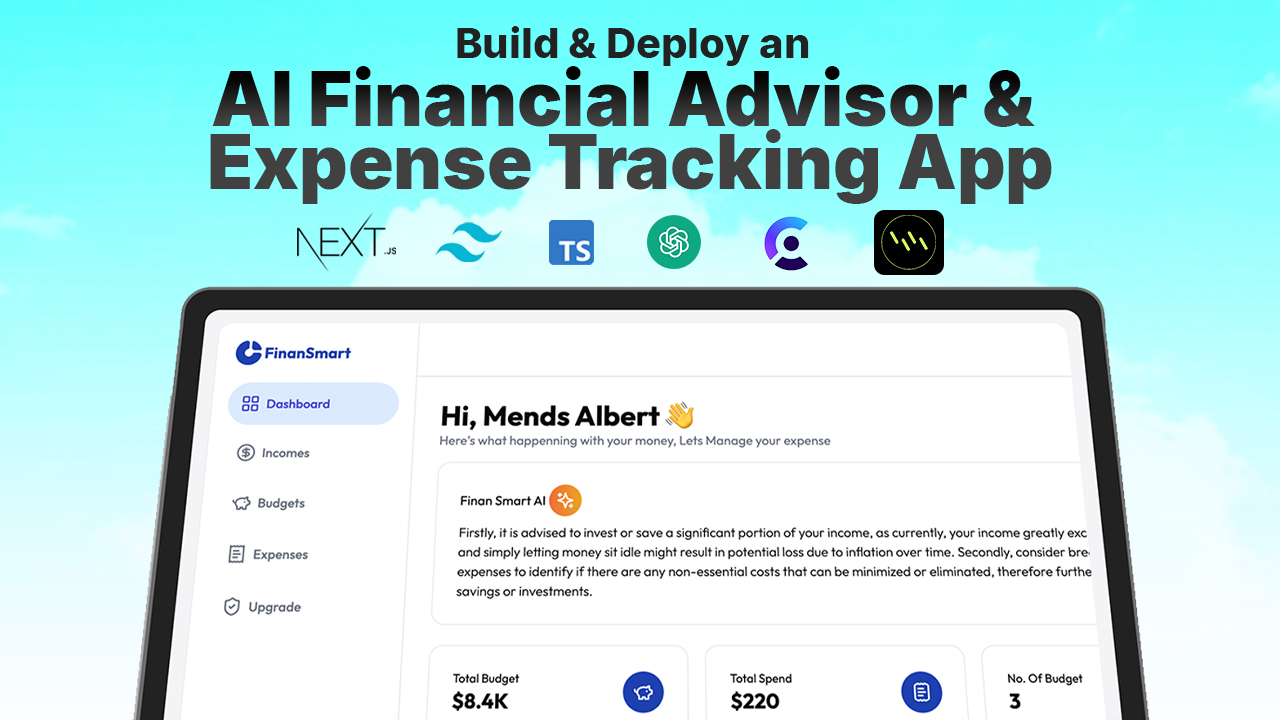



ApexFinance AI is a sophisticated, production-ready financial intelligence platform that leverages cutting-edge artificial intelligence to deliver personalized financial insights and recommendations. Built by a senior AI engineer with expertise in modern web technologies, machine learning integration, and scalable system design, this application demonstrates enterprise-level architecture patterns and best practices.
This project showcases advanced technical capabilities including:
- AI-Driven Financial Analysis: Integration with OpenAI's GPT-4 model to provide contextual, personalized financial advice based on comprehensive user financial data
- Modern Full-Stack Architecture: Built on Next.js 14 with App Router, implementing server-side rendering, API routes, and optimized client-side interactions
- Enterprise Authentication: Secure user management using Clerk's authentication system with support for multiple authentication providers
- Real-Time Data Visualization: Interactive charts and dashboards powered by Recharts, providing intuitive financial data representation
- Type-Safe Development: Full TypeScript implementation ensuring type safety across the entire application stack
- Database Architecture: Efficient data modeling using Drizzle ORM with PostgreSQL, demonstrating advanced database design patterns
- Responsive UI/UX: Modern, accessible interface built with Tailwind CSS and Radix UI components, ensuring cross-device compatibility
The application follows a modular, scalable architecture pattern:
- Component-Based Architecture: Reusable React components organized by feature domains (dashboard, expenses, incomes, budgets)
- Server-Side Rendering (SSR): Optimized page loads and SEO through Next.js SSR capabilities
- API Route Optimization: Efficient server-side API endpoints handling AI model interactions and database operations
- Middleware Integration: Route protection and authentication middleware ensuring secure access to protected resources
- State Management: Client-side state management optimized for performance and user experience
The database architecture implements normalized relational models for:
- User financial profiles and authentication data
- Income tracking with categorization and temporal analysis
- Expense management with detailed categorization and budget associations
- Budget planning with dynamic allocation and tracking mechanisms
Income Tracking System
- Comprehensive income entry with multiple source support
- Temporal analysis and trend visualization
- Categorized income streams for detailed financial analysis
Expense Management
- Detailed expense logging with categorization
- Budget association and tracking
- Historical expense analysis with visual representations
- Edit and delete functionality with data integrity preservation
Budget Planning & Monitoring
- Dynamic budget creation with category-based allocation
- Real-time budget vs. actual spending comparisons
- Visual indicators for budget health and adherence
- Proactive alerts for budget threshold breaches
Personalized Financial Advice
- Context-aware recommendations using GPT-4
- Analysis of income patterns, spending habits, and budget adherence
- Actionable insights tailored to individual financial situations
- Multi-factor financial health assessment
Intelligent Data Processing
- Natural language processing of financial data
- Pattern recognition in spending behaviors
- Predictive insights for future financial planning
Interactive Dashboard
- Real-time financial overview with key metrics
- Visual data representation through charts and graphs
- Quick access to all financial management features
- Responsive design ensuring optimal experience across devices
Secure Authentication
- Multi-provider authentication support
- Session management and security
- Protected routes and API endpoints
- Next.js 14.2.2: React framework with App Router, Server Components, and optimized performance
- TypeScript: Type-safe development ensuring code reliability and maintainability
- Tailwind CSS: Utility-first CSS framework for rapid, responsive UI development
- Radix UI: Accessible component primitives for professional UI components
- Framer Motion: Advanced animation library for smooth user interactions
- Recharts: Composable charting library for data visualization
- OpenAI API (GPT-4): Advanced language model integration for AI-powered financial analysis
- Clerk Authentication: Enterprise-grade authentication and user management
- Drizzle ORM: Type-safe database toolkit with PostgreSQL support
- Neon Serverless: Serverless PostgreSQL database for scalable data storage
- Drizzle Kit: Database migrations and schema management
- ESLint: Code quality and consistency enforcement
- PostCSS: CSS processing and optimization
Ensure you have the following installed:
- Node.js (v18 or higher)
- npm or yarn package manager
- Git for version control
- PostgreSQL database (or Neon Serverless account)
- Clone the Repository
git clone <repository-url>
cd ai-finance-tracking- Install Dependencies
npm install
# or
yarn install- Environment Configuration
Create a .env file in the root directory with the following variables:
# Clerk Authentication
NEXT_PUBLIC_CLERK_PUBLISHABLE_KEY=your_clerk_publishable_key
CLERK_SECRET_KEY=your_clerk_secret_key
NEXT_PUBLIC_CLERK_SIGN_IN_URL=/sign-in
NEXT_PUBLIC_CLERK_SIGN_UP_URL=/sign-up
NEXT_PUBLIC_CLERK_AFTER_SIGN_IN_URL=/
NEXT_PUBLIC_CLERK_AFTER_SIGN_UP_URL=/

# OpenAI API
NEXT_PUBLIC_OPENAI_API_KEY=your_openai_api_key

# Database
NEXT_PUBLIC_DATABASE_URL=your_postgresql_connection_string- Database Setup
Run database migrations:
npm run db:push- Start Development Server
npm run devThe application will be available at http://localhost:3000
To inspect and manage your database visually:
npm run db:studioThe banner image above showcases the ApexFinance AI dashboard interface, demonstrating:
- Modern UI Design: Clean, professional interface with intuitive navigation and visual hierarchy
- Data Visualization: Interactive charts displaying financial trends and patterns
- Real-Time Metrics: Key financial indicators prominently displayed for quick decision-making
- Responsive Layout: Optimized layout ensuring usability across desktop, tablet, and mobile devices
The dashboard provides users with an immediate overview of their financial health, featuring:
- Total income and expense summaries
- Budget utilization indicators
- Spending trend visualizations
- Quick access to detailed financial management features
The embedded video demonstration provides a comprehensive walkthrough of the application's capabilities, including:
- User Authentication Flow: Secure sign-up and sign-in processes
- Financial Data Entry: Intuitive forms for adding income, expenses, and budgets
- AI Advice Generation: Real-time demonstration of AI-powered financial recommendations
- Dashboard Navigation: Overview of the complete user interface and feature set
- Data Visualization: Interactive exploration of charts and financial metrics
- Budget Management: Creating and tracking budgets with visual feedback
This demonstration highlights the seamless user experience and sophisticated technical implementation, showcasing how complex financial data management and AI integration can be presented through an elegant, user-friendly interface.
Built with precision and attention to detail by a senior AI engineer specializing in modern web technologies, AI/ML integration, and scalable system architecture.