FieldFlow turns OpenAPI-described REST endpoints into selectively filtered tools. It generates Pydantic models and FastAPI routes that forward requests to the upstream API and return only the fields the caller asks for. An optional MCP layer exposes those generated OpenAPI tools to Model Context Protocol clients such as Claude Desktop.
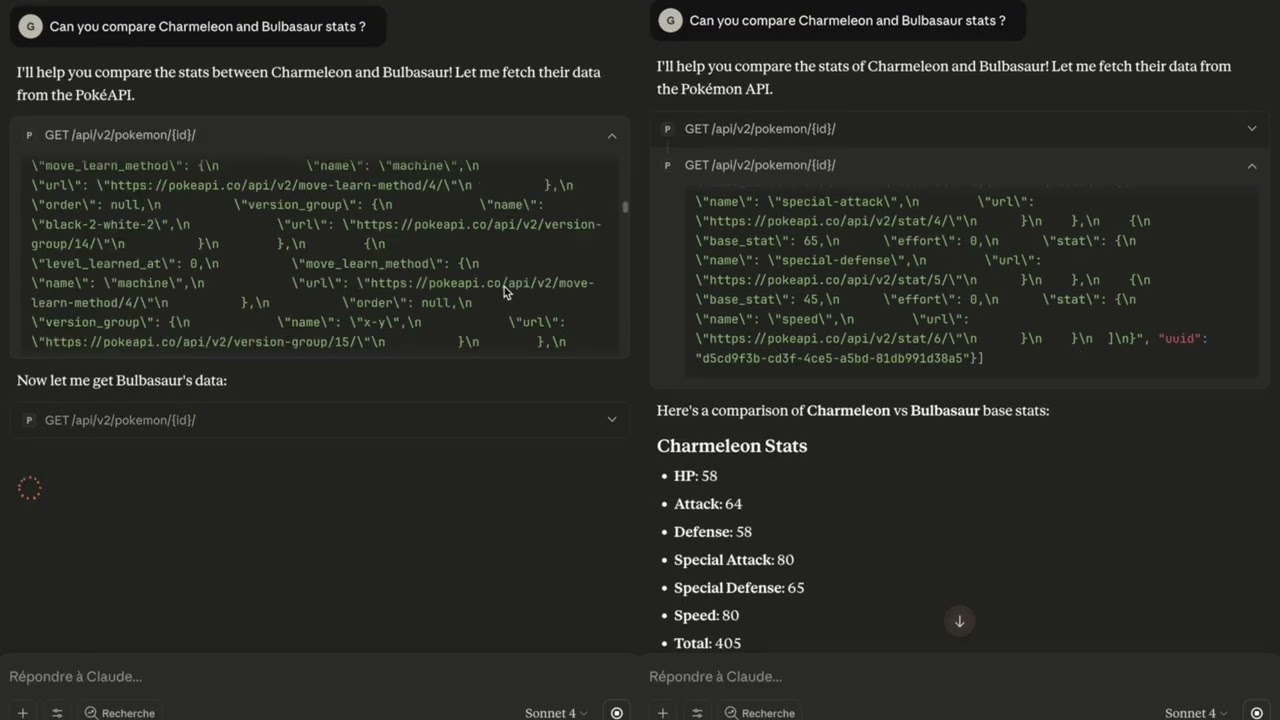
- Discovers endpoints and schemas from OpenAPI 3.0 JSON or YAML files.
- Builds request/response Pydantic models dynamically, preserving aliases and optional fields.
- Generates FastAPI routes that accept parameters plus an optional
fieldslist to slice responses. - Proxies requests with
httpx, automatically formatting URL paths and query parameters. - Works with any OpenAPI-compliant spec, including nested schemas and refs.
FieldFlow currently has two supported application modes:
fieldflow serve-httpexposes generated HTTP tool endpoints from an OpenAPI spec.fieldflow-mcpexposes the same generated OpenAPI tools through MCP over stdio.
FieldFlow does not yet wrap arbitrary third-party MCP servers. That direction is planned around MCP tools that expose structured outputSchema, but it is not part of the current release.
fieldflow/
  config.py          # Environment-based settings
  http_app.py        # FastAPI app factory
  openapi_loader.py  # JSON/YAML loader with PyYAML fallback
  proxy.py           # Async HTTP proxy that filters responses to requested fields
  spec_parser.py     # Schema parser and dynamic Pydantic model generator
  tooling.py         # FastAPI router builder for tool endpoints
fieldflow_mcp/
  server.py          # MCP server wrapper built on FastMCP
  cli.py             # CLI entry point for the MCP server
examples/
  jsonplaceholder_openapi.yaml  # Minimal sample spec
  pokeapi_openapi.yaml          # Larger spec for stress-testing
python -m venv .venv
source .venv/bin/activate
pip install --upgrade pip
pip install -e '.[mcp]'  # zsh users: quote to avoid globbing
fieldflow serve-http --reload
OpenAPI specs are resolved from FIELD_FLOW_OPENAPI_SPEC_PATH. If the spec
includes a servers entry the first URL is used; otherwise set
FIELD_FLOW_TARGET_API_BASE_URL.
| Variable | Description | Default |
|---|---|---|
FIELD_FLOW_OPENAPI_SPEC_PATH |
Path to the OpenAPI JSON/YAML file | examples/jsonplaceholder_openapi.yaml |
FIELD_FLOW_TARGET_API_BASE_URL |
Upstream REST API base URL (overrides spec servers) |
derived from spec |
FieldFlow supports secure API authentication through environment variables. All credentials are handled securely with automatic sanitization in logs and error messages.
# Bearer token (OAuth 2.0, JWT)
export FIELDFLOW_AUTH_TYPE=bearer
export FIELDFLOW_AUTH_VALUE=your-token-here

# API Key
export FIELDFLOW_AUTH_TYPE=apikey
export FIELDFLOW_AUTH_HEADER=X-API-Key  # Optional, defaults to X-API-Key
export FIELDFLOW_AUTH_VALUE=your-api-key-here

# Basic authentication
export FIELDFLOW_AUTH_TYPE=basic
export FIELDFLOW_AUTH_VALUE=base64-encoded-credentialsWhen your OpenAPI spec defines security schemes, FieldFlow automatically uses them:
components:
  securitySchemes:
    BearerAuth:
      type: http
      scheme: bearer
    ApiKeyAuth:
      type: apiKey
      in: header
      name: X-API-Key
With security schemes, provide credentials using the scheme name:
export FIELDFLOW_AUTH_BEARERAUTH_VALUE=your-bearer-token
export FIELDFLOW_AUTH_APIKEYAUTH_VALUE=your-api-key
Security features:
- Credentials are never logged or stored
- Auth headers are sanitized in all error messages
- Memory-safe handling with immediate credential clearing
- Environment-only configuration (no hardcoded secrets)
Fetch only selected fields for a user:
curl -X POST http://127.0.0.1:8000/tools/get_user_info \
  -H "Content-Type: application/json" \
  -d '{"user_id": 1, "fields": ["name", "email"]}'
List posts for a user, reducing each item to id and title:
curl -X POST http://127.0.0.1:8000/tools/list_posts \
  -H "Content-Type: application/json" \
-d '{"userId": 1, "fields": ["id", "title"]}'Request deeply nested data with a JSONPath-lite syntax tailored for LLMs:
- Use dots (
damage_relations.double_damage_from) to traverse objects. - Append
[]to map over every element in a list (moves[].move.name). - Mix top-level and nested selectors in the same request; missing branches are skipped.
Example with the PokeAPI spec:
curl -X POST http://127.0.0.1:8000/tools/pokemon_read \
  -H "Content-Type: application/json" \
  -d '{"id": 150, "fields": ["name", "types[].type.name", "stats.attack.base_stat"]}'
The proxy trims everything except Mewtwo's name, each type name, and the attack stat. Invalid selectors (for example moves[0].move) return a 422 error before the upstream API is called.
Switch to the richer PokeAPI specification:
export FIELD_FLOW_OPENAPI_SPEC_PATH=examples/pokeapi_openapi.yaml
fieldflow serve-http --reload
List the first few abilities:
curl -X POST http://127.0.0.1:8000/tools/ability_list \
  -H "Content-Type: application/json" \
  -d '{"limit": 5, "fields": ["results"]}'
Query a single ability by ID:
curl -X POST http://127.0.0.1:8000/tools/ability_read \
  -H "Content-Type: application/json" \
  -d '{"id": 65, "fields": ["name", "effect_entries"]}'
FastAPI automatically publishes documentation at http://127.0.0.1:8000/docs, letting you explore and invoke the generated tool endpoints interactively.
Use the bundled CLI for a streamlined experience:
# Run the HTTP proxy
fieldflow serve-http --host 127.0.0.1 --port 8000

# Run the MCP server over stdio (ideal for Claude Desktop)
fieldflow-mcpfieldflow-cli wraps any JSON-emitting CLI (gh, gcloud, kubectl, aws,
…) and returns only the fields you project. The wrapped command runs once,
but the model only ever sees the reduced payload — which is how you keep
noisy list / get / describe / logs output out of your context window.
Example — open PRs on a GitHub repo:
# 1. Inspect the shape (writes a compact manifest to .fieldflow/inspect/)
fieldflow-cli inspect -- \
  gh pr list --repo mnfst/manifest --state open \
    --json number,title,author,createdAt,isDraft,additions,deletions,changedFiles,labels,body \
    --limit 100

# 2. Re-run with just the fields you actually need
fieldflow-cli \
  --field "[].number" \
  --field "[].title" \
  --field "[].author.login" \
  --field "[].createdAt" \
  --field "[].isDraft" \
  --field "[].additions" \
  --field "[].deletions" \
  --field "[].changedFiles" \
  --field "[].labels[].name" \
  -- \
  gh pr list --repo mnfst/manifest --state open \
    --json number,title,author,createdAt,isDraft,additions,deletions,changedFiles,labels,body \
    --limit 100
On a real run against mnfst/manifest (26 open PRs), this dropped the
payload from 23,722 tokens to 2,779 — an 88% reduction, mostly by
stripping PR body markdown.
Example — Cloud Run error logs:
fieldflow-cli \
  --field "[].timestamp" \
  --field "[].severity" \
  --field "[].httpRequest.requestUrl" \
  --field "[].jsonPayload.message" \
  --max-items 25 \
  -- \
  gcloud logging read \
    'resource.type="cloud_run_revision" AND severity>=ERROR' \
    --project=my-project --freshness=24h --limit=2000 --format=json
The wrapped command must already support JSON output (gh --json …,
gcloud --format=json, kubectl -o json, aws --output json). If the
projection is too narrow, broaden it and rerun. The older
fieldflow run-cli … form still works, but fieldflow-cli … is the
intended direct wrapper.
This repo ships a Claude Code skill that teaches the agent when to reach
for fieldflow-cli automatically — on noisy gh, gcloud, kubectl, aws
commands, but not on trivial local ones. Install it with a symlink so it
stays in sync with the repo:
mkdir -p ~/.claude/skills
ln -s "$(pwd)/.agents/skills/fieldflow-cli" ~/.claude/skills/fieldflow-cli
Or copy it if you prefer a snapshot:
cp -r .agents/skills/fieldflow-cli ~/.claude/skills/That's it — next time Claude Code starts, the fieldflow-cli skill is
available and will be invoked on qualifying JSON CLI commands.
The skill source lives at
.agents/skills/fieldflow-cli/SKILL.md.
An OpenAI-agent variant is also provided under
.agents/skills/fieldflow-cli/agents/openai.yaml.
Install the development dependencies and run the same checks used in CI:
pip install -e '.[dev,mcp]'
ruff check fieldflow fieldflow_mcp tests
black --check fieldflow fieldflow_mcp tests
mypy fieldflow fieldflow_mcp
pytest
python -m build
python -m pip checkTo connect the server to Claude Desktop:
- Install with the MCP extra (
pip install -e '.[mcp]'). - Claude Desktop launches configured MCP servers on startup, so there is no need to run
fieldflow-mcpmanually. - Open Claude Desktop > Settings > Developer > Modify Config, then paste a configuration that points to the FieldFlow server (see
claude_config_example/claude_desktop_config.json). - For additional details, review the Model Context Protocol guide: https://modelcontextprotocol.io/docs/develop/connect-local-servers.
- Claude will automatically list the generated tools and can invoke them during chats once the config is saved.
Contributions are welcome! Please read CONTRIBUTING.md for instructions on setting up a development environment and submitting changes.
This project is licensed under the MIT License.