Hi!
First off thank you for creating such a library! It'd be of huge help for me if only I could get it to work.
If I use some of the sample objects as an input for the solve method from your test set (with the bare minimum properties), the method outputs a single solution (which is fine if it's the most optimal one).
This is how I'm calling the solve:
const solutions = solve(stops, initialTime, 100)
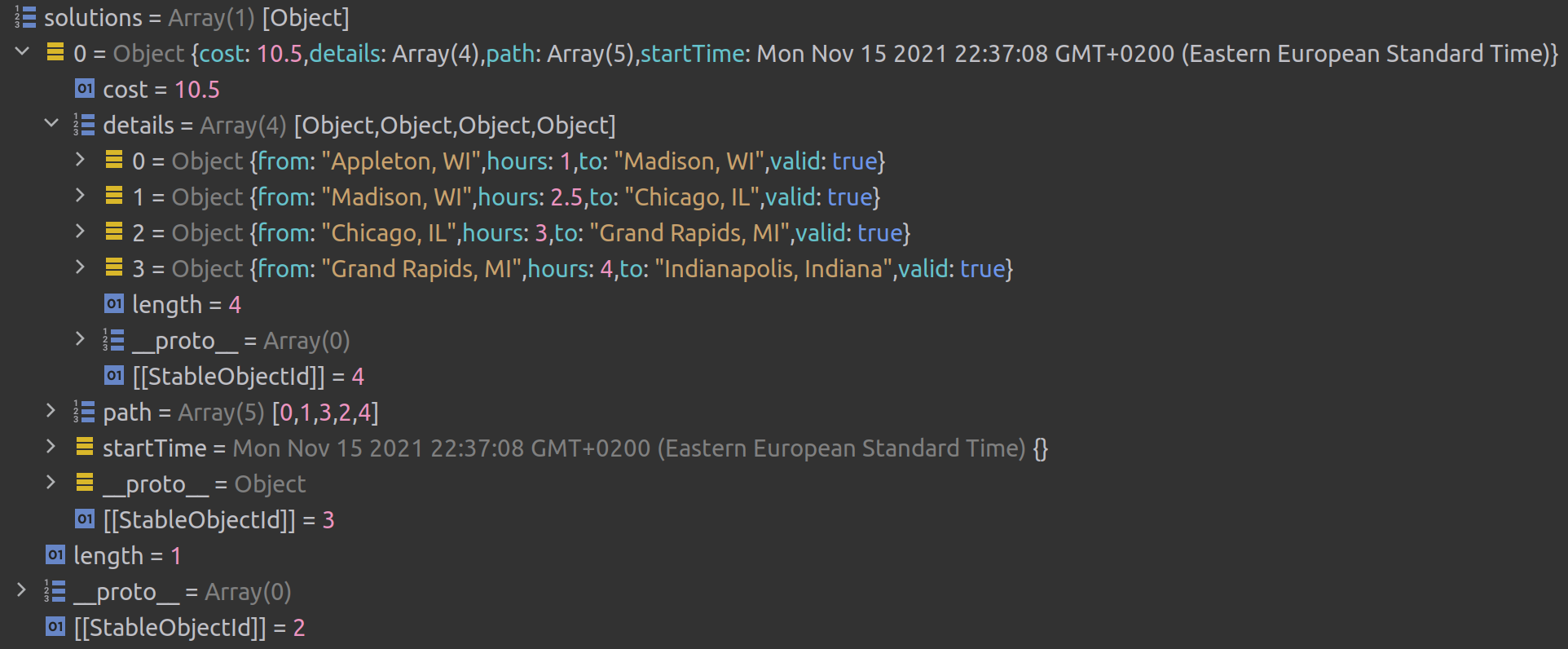
Here's the outputted solution:
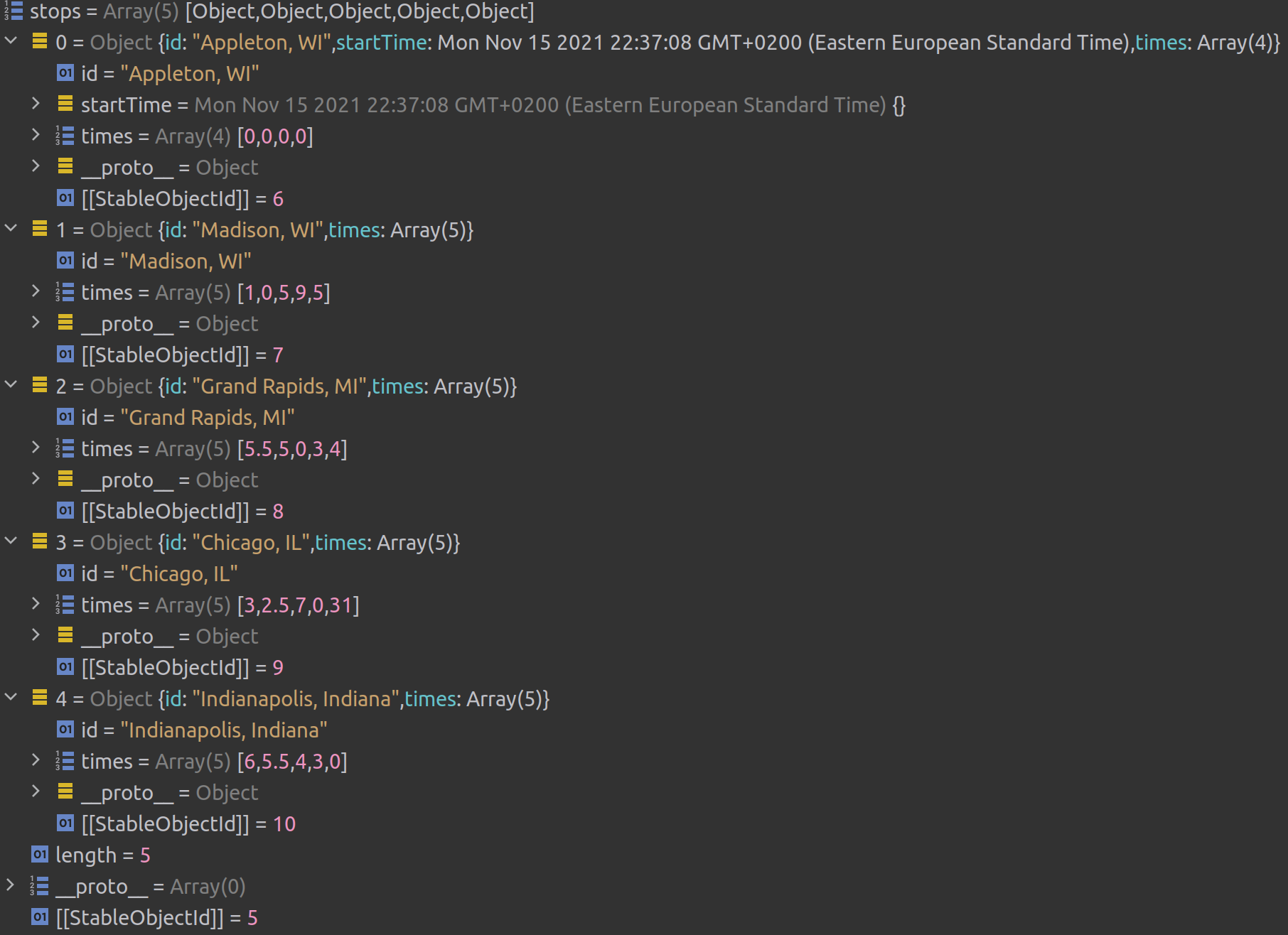
If I pass my own objects to the solve method, I get no results. The method throws nothing nor hints to something that could be used to solve the issue. Attached below are the places' structures (stops are from your sample solution, allTspwcStops are constructed by me).
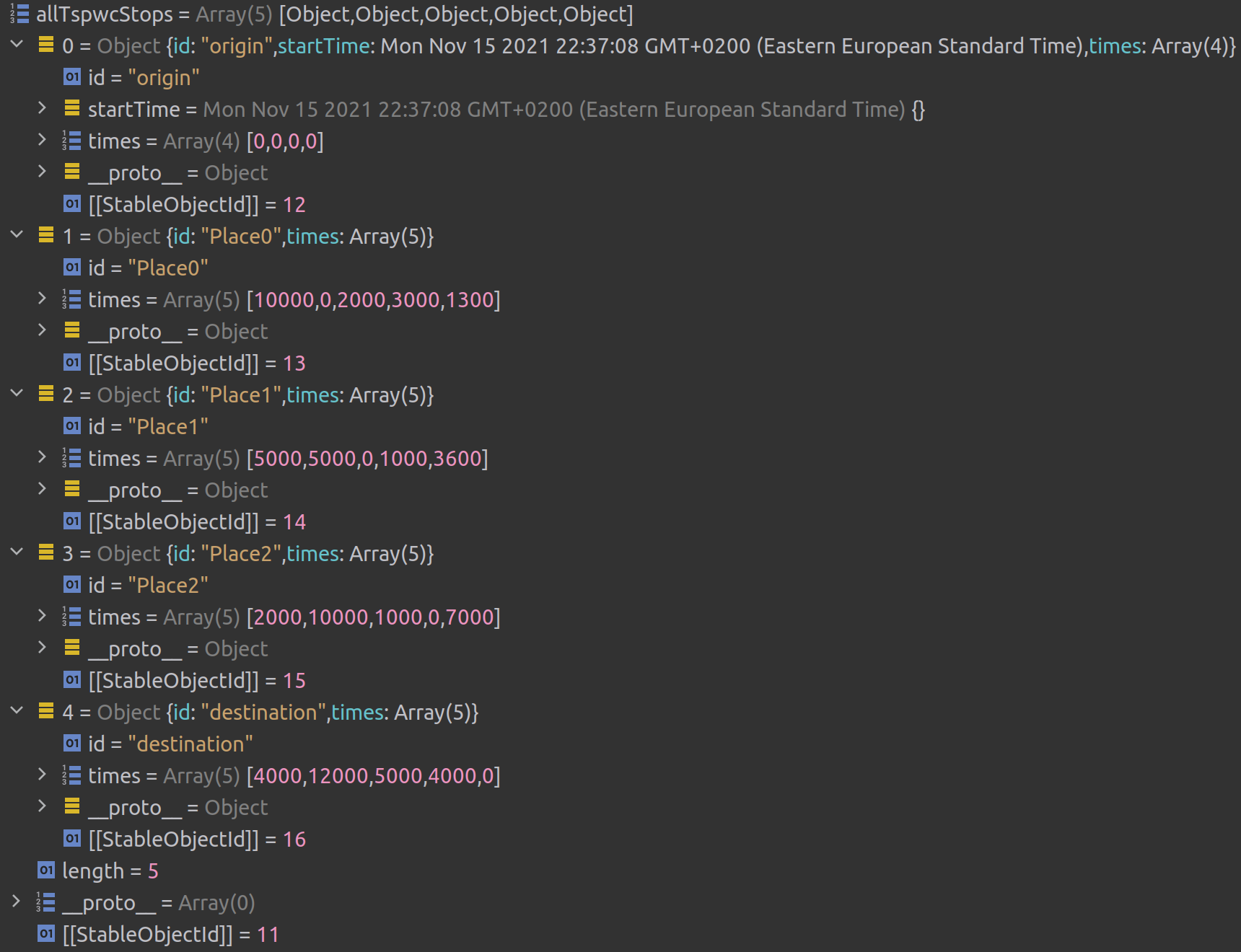
Does something strike you right away which I'm not understanding correctly here?
Also it would help a new user to have an explanation for constructing the ITspStop object (more specifically, the times property was kind of confusing without further analysis).
Looking forward to hearing from you!
Hi!
First off thank you for creating such a library! It'd be of huge help for me if only I could get it to work.
If I use some of the sample objects as an input for the
solvemethod from your test set (with the bare minimum properties), the method outputs a single solution (which is fine if it's the most optimal one).This is how I'm calling the
solve:const solutions = solve(stops, initialTime, 100)Here's the outputted

solution:If I pass my own objects to the


solvemethod, I get no results. The method throws nothing nor hints to something that could be used to solve the issue. Attached below are the places' structures (stopsare from your sample solution,allTspwcStopsare constructed by me).Does something strike you right away which I'm not understanding correctly here?
Also it would help a new user to have an explanation for constructing the
ITspStopobject (more specifically, thetimesproperty was kind of confusing without further analysis).Looking forward to hearing from you!